Intro
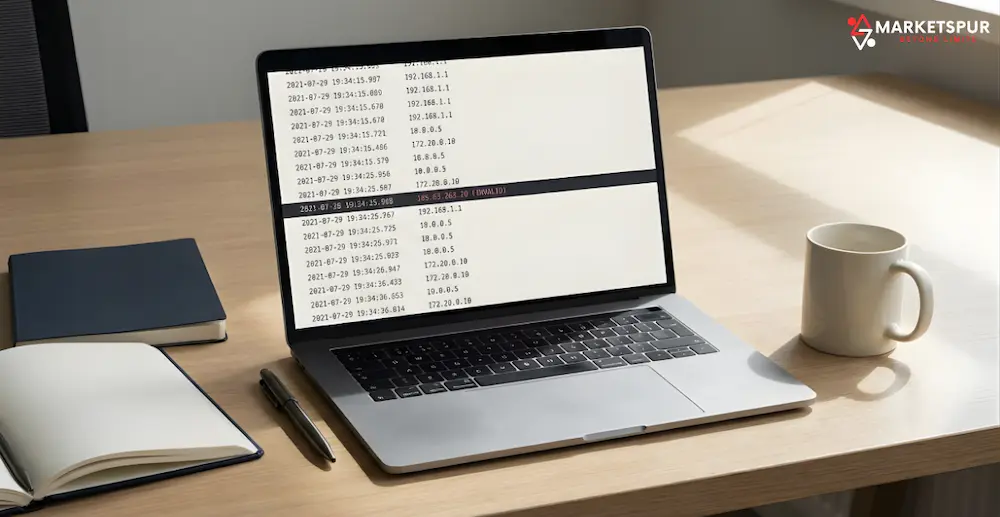
Have you ever checked your server logs and suddenly stumbled upon something like 185.63.263.20 and thought, “Who invited this guest to my network party?”
You are not alone.
As a developer, analyst, or even a curious internet user, encountering strange IP addresses is part of the digital journey. Some IPs are friendly neighbours, others are noisy strangers knocking at your firewall door at 3 a.m. And then there are IPs like 185.63.263.20 that make you pause and scratch your head.
In this article, I will walk you step by step through what 185.63.263.20 means, why it matters, and how to analyse it responsibly. We will keep things conversational, practical, and slightly humorous—because cybersecurity doesn’t always have to feel like reading a legal contract.
Think of this blog as your detective notebook.
Section 1: Understanding What 185.63.263.20 Really Is
A developer’s first instinct: “Is this even valid?”
Let’s start with a simple truth. An IPv4 address must contain four numbers between 0 and 255.
Here’s the twist: 185.63.263.20 contains 263, which is outside the valid IPv4 range.
That alone raises an eyebrow. From a technical standpoint, 185.63.263.20 is not a valid IPv4 address. This means it could be:
- A logging error
- A spoofed entry
- A malformed request
- Or a misconfigured application record
In real-world development, logs are like messy diaries. They don’t always tell the truth clearly. Sometimes they whisper nonsense.
Why would such an IP appear in logs?
Here’s an anecdote. Once, a junior developer on my team panicked because an IP “attacked” his server. Turned out, it was just a parsing bug from an outdated plugin.
Similarly, 185.63.263.20 might appear due to:
- Proxy misconfiguration
- Corrupt log data
- Bot-generated traffic
- Input validation failure
The lesson? Never jump to conclusions. Always analyse first, panic later.
Section 2: Why Developers Care About IP Addresses Like 185.63.263.20
IP addresses are digital fingerprints
Every device online leaves footprints. IP addresses are those footprints. When something unusual like 185.63.263.20 shows up, it’s like finding muddy shoes on a clean carpet.
Developers track IPs to:
- Monitor traffic
- Detect abuse
- Improve security
- Troubleshoot errors
- Analyse user behaviour
So when an invalid or suspicious IP appears, it deserves investigation.
The security angle: curiosity saves servers
Cybersecurity is not about fear. It’s about curiosity.
When you see 185.63.263.20, ask:
- Did this request fail?
- Was there a pattern?
- Did it try multiple ports?
- Did it trigger firewall rules?
Think of it like hearing a knock on your door. You don’t open blindly. You look through the peephole first.
Section 3: Practical Steps to Analyse 185.63.263.20
Step 1: Validate the format
First, check if the IP is mathematically correct. Since 263 > 255, this IP is invalid. That means:
- It cannot belong to a real device
- It cannot be geolocated properly
- It cannot be routed on the internet
This immediately suggests a software or data issue.
Step 2: Inspect your logs deeply
Look at:
- Timestamp
- Request type
- URL accessed
- User agent
- Response code
Sometimes the IP is just a side character in a bigger story. The real villain might be a broken script or a malicious bot.
Step 3: Cross-check with security tools
Use:
- Firewall logs
- Intrusion detection systems
- Web server logs
- Application logs
If 185.63.263.20 appears repeatedly, then it’s not random noise—it’s a pattern worth studying.
Section 4: Common Problems Linked with 185.63.263.20
Problem 1: Log corruption
Corrupt logs happen more often than people admit. Disk issues, encoding problems, and software bugs can turn valid IPs into nonsense.
Imagine writing “London” and the pen slips into “Lond0n”. Same story, digital version.
Problem 2: Spoofed traffic
Some attackers intentionally send malformed packets. Why?
Because confusion buys them time.
An invalid IP like 185.63.263.20 might be:
- A test probe
- A bot experiment
- A misfired exploit attempt
However, not every strange IP is malicious. Sometimes it’s just a tired server speaking gibberish.
Section 5: How to Protect Your System from Suspicious IP Entries
Good practices that actually work
Security is like brushing teeth. Boring but necessary.
To handle IPs like 185.63.263.20, you should:
- Validate input data
- Enable firewall rules
- Use updated logging software
- Monitor traffic patterns
- Apply rate limiting
These steps don’t require magic. Just discipline.
Automation saves sanity
Modern developers automate everything—from coffee machines to server defence.
Use:
- Log analysers
- SIEM tools
- Alerts for malformed IPs
This way, instead of babysitting logs, you get meaningful insights.
Section 6: The Human Side of Debugging Strange IPs
A short story
A friend once said, “Debugging is like arguing with a ghost.”
IPs like 185.63.263.20 feel exactly like that.
But every strange log entry is a chance to learn. It trains your mind to:
- Question assumptions
- Understand protocols
- Strengthen security
- Improve systems
In the developer world, confusion is the doorway to mastery.
Why this knowledge matters to everyone (age 14–50)
Whether you’re:
- A student
- A blogger
- A system admin
- A business owner
Understanding IP behaviour keeps you safer online.
It’s digital literacy, not just tech jargon.
FAQs
Q1: Is 185.63.263.20 a real IP address?
No. IPv4 numbers must be between 0 and 255. Since 263 exceeds this, it is invalid.
Q2: Why do I see 185.63.263.20 in my logs?
Likely due to log errors, misconfigured software, or malformed requests.
Q3: Is 185.63.263.20 dangerous?
Not directly. It’s more a symptom than a threat. Investigate patterns before assuming risk.
Q4: Should I block it?
You cannot block an invalid IP, but you can improve filtering and validation rules.
Q5: Can hackers use invalid IPs?
Yes, sometimes for testing or obfuscation. But most cases are technical glitches.
Call to Action (CTA)
If you found this guide useful, don’t stop here.
Audit your logs today. Strengthen your security tomorrow. And share this article with someone who still thinks IP addresses are just random numbers.
Because in the digital world, knowledge is the best firewall.
Disclaimer
This article is for educational and informational purposes only. It does not provide legal or professional cybersecurity advice. Always consult qualified professionals for critical security decisions.
Final Thoughts
The mystery of 185.63.263.20 teaches us an important lesson:
Not everything strange is dangerous, but everything strange deserves attention.
Like a crooked street sign, this IP reminds us that the internet is built by humans—and humans make mistakes. By understanding these mistakes, we become better developers, safer users, and smarter digital citizens.
So next time you see 185.63.263.20, don’t panic. Smile.
You’ve just found another puzzle in the grand game of the internet.