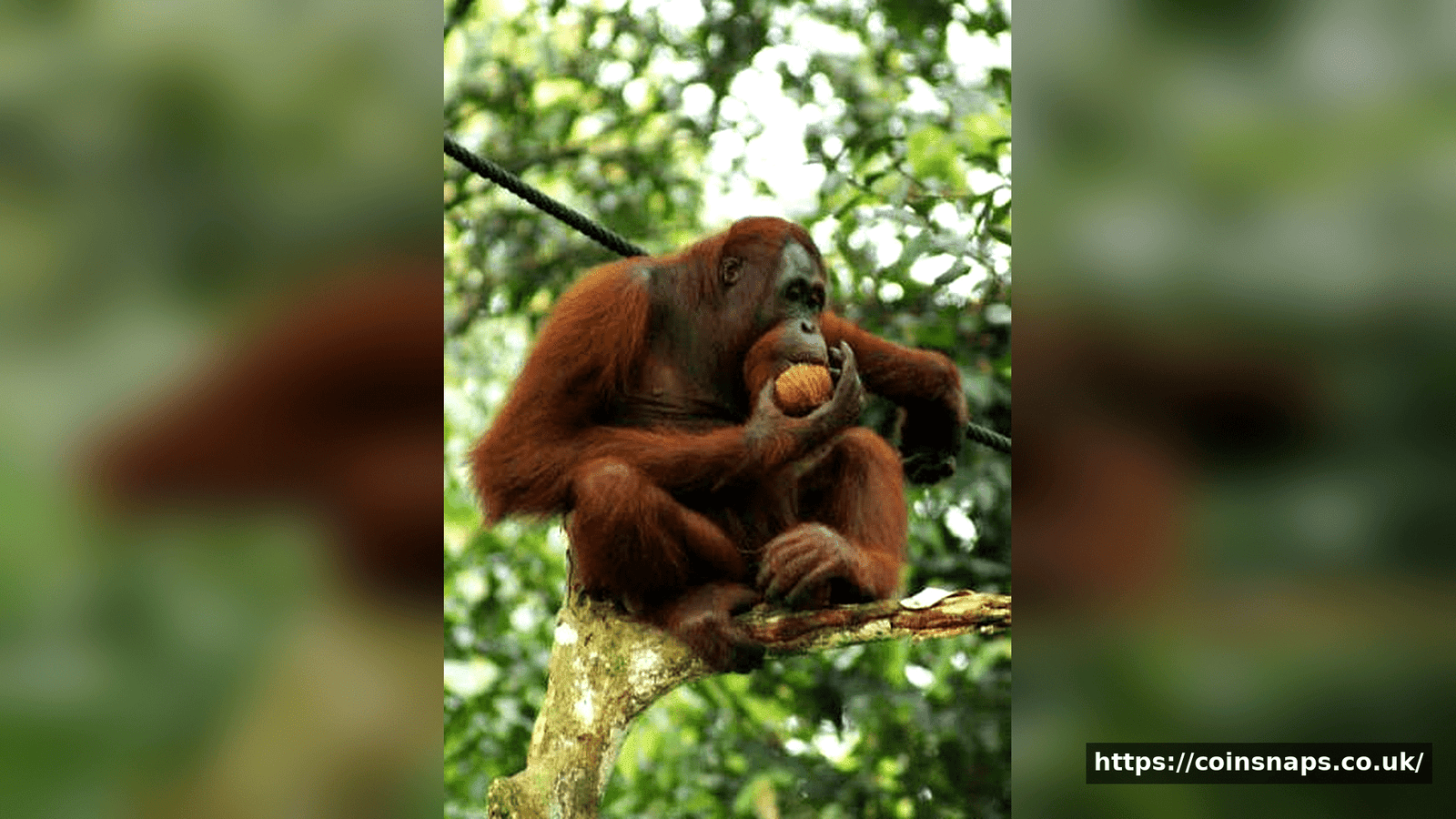
Orangutans are amazing animals. They are the only great apes that live in Asia. The name “orangutan” comes from the Malay language and means “person of the forest” . This name is perfect because these apes truly belong in the trees. They are the largest tree-dwelling mammal on Earth . But their home is disappearing. This article explores the world of the orangutan. We will look at where they live, what they need to survive, and the dangers they face.
Table of Contents
Where is the Orangutan Habitat?
The orangutan habitat is found only on two islands. These are Sumatra and Borneo in Southeast Asia . These islands have very old rainforests. The air is hot and humid, and it rains a lot. This supports a huge variety of plants and animals. A century ago, orangutans lived in many parts of Southeast Asia. Today, they are confined to these two islands . This is due to habitat loss. The natural range of these great apes has shrunk.
Types of Orangutan and Their Homes
There are three different species of orangutan. Each species lives in a slightly different area. They are all critically endangered. Their survival depends on the rainforest.
1. The Bornean Orangutan (Pongo pygmaeus): This is the largest species. They live on the island of Borneo . Their range is in Malaysia and Indonesia. They can live in many types of forests. This includes lowland forests and mountain forests. They are found up to 1,500 meters above sea level .
2. The Sumatran Orangutan (Pongo abelii): This species lives in the north of Sumatra. Their population is very small. Experts estimate there are only about 13,846 left in the wild . They are very rare. They depend on high-quality forest areas.
3. The Tapanuli Orangutan (Pongo tapanuliensis): This is the most endangered great ape. It was only identified as a species recently. They live in a very small area in Sumatra. Only about 800 remain. They face the greatest risk of extinction.
The Forest Canopy: Life in the Trees
Orangutans spend almost their entire lives in the trees. This makes their habitat very important. They travel by swinging from branch to branch. Their arms are longer than their bodies. This helps them move easily . They have strong hands and feet for grasping. On the ground, they are slow. They use their arms for balance. The forest canopy is their world.
What Makes a Good Orangutan Habitat?
A good orangutan habitat must have plenty of food. Orangutans eat mainly fruit. They love figs and the fruit of the durian tree. They can eat up to 100 different kinds of fruit . Their habitat must have many fruit trees. When fruit is scarce, they eat leaves, bark, and insects. They also need trees for nesting. They build a new nest every night . They use branches and leaves to make a comfy bed . A healthy forest provides all of this.
Diet in the Wild
Orangutans are frugivores. This means fruit is their main food. They play a vital role in the health of their habitat. They eat fruit and spread the seeds. This is like planting new trees. The rainforest needs orangutans. They help it stay healthy and diverse . Without them, some tree species would disappear. This shows how connected life is in the forest.
Why is the Orangutan Habitat Disappearing?
The biggest threat is the destruction of their home. This is mainly due to deforestation. People cut down the forest for timber. They clear the land for farming. The biggest cause is the growth of palm oil plantations . Vast areas of rainforest are being destroyed. This fragments the forest. It leaves orangutans in small pieces of habitat. This makes it hard to find food and mates . It leads to a decline in their population.
Specific Threats: Sumatran Orangutans
The Sumatran orangutan habitat faces specific problems. The forests in Sumatra are being lost quickly. This is because of fires. People often set fires to clear land for plantations . This is a regular disaster. The flames destroy huge areas of forest. Many orangutans are too slow to escape the fires. A planned road in northern Sumatra is also a threat. It would fragment one of the last major orangutan habitats .
Conservation Efforts for the Orangutan Habitat
People are working hard to protect orangutans. Conservation groups are working to save the rainforest. They are creating protected areas. They also work with companies. They try to stop the illegal pet trade. Another important effort is habitat restoration. In East Kalimantan, they are building corridors to connect fragmented habitats . This helps orangutans move safely between areas of forest.
The Future of the Orangutan Habitat
The future of the orangutan habitat is uncertain. It depends on how well we protect the rainforest. The remaining population is small. The Bornean orangutan has about 104,700 left. The Sumatran population is just under 14,000 . These numbers are declining. The main challenge is to stop deforestation. If the forest goes, the orangutans go. It is as simple as that. We must act now to save their home.
Conclusion
The orangutan habitat is a beautiful and complex place. It is a world in the treetops. These intelligent apes are an important part of the ecosystem. They are the “gardeners of the forest.” But their home is under attack. The loss of the rainforest is the main threat. This leads to the loss of these magnificent animals. We need to support sustainable practices. Choose palm oil that is certified sustainable. Support conservation organizations. We have the power to ensure that orangutans continue to swing through the trees for generations to come.
Frequently Asked Questions (FAQ) About Orangutan Habitat
Are orangutans only found in the wild on two islands?
Yes, orangutans are only found in the wild on the islands of Borneo and Sumatra. These are the last remaining strongholds for the three species of orangutans .
What type of rainforest do orangutans live in?
Orangutans live in a variety of forest types. This includes tropical and swamp forests. They also live in lowland and mountain forests. They depend on areas with a high density of fruit trees .
How does deforestation affect the orangutan habitat?
Deforestation destroys the trees that orangutans live in. It also reduces the food available. It splits the forest into small pieces. This isolates populations. It makes them more vulnerable to extinction .
What is a “habitat corridor” for orangutans?
A habitat corridor is a strip of forest that connects two larger areas. It allows orangutans to move safely. This prevents inbreeding. It helps them find food and mates .
How many orangutans are left in the wild?
There are approximately 104,700 Bornean orangutans and 13,846 Sumatran orangutans left in the wild. The Tapanuli orangutan has a population of only about 800 .
Why do orangutans build a new nest every night?
Orangutans build a new nest in the trees almost every night. They do this for comfort and safety. It may also be a way to avoid parasites that could be in an old nest .