Many pool owners feel nervous when they need to adjust chlorine. The reason is simple. Chlorine affects safety, water clarity, and swimmer comfort, but adding the wrong amount can create a new problem instead of fixing the first one. Some owners underdose because they do not want to overdo it. Others pour in too much because they want a fast result. Both habits come from the same issue: guesswork.
The good news is that chlorine adjustment does not need to feel like trial and error. A safe adjustment is usually based on a few simple facts. You need to know the current chlorine reading, the pool volume, the type of chlorine product you are using, and the target you want to reach. Once those pieces are clear, the process becomes much more controlled.
This is especially important for new pool owners. They often hear broad advice like “add some chlorine” or “shock the pool,” but that kind of guidance can be too vague. A pool responds better when treatment is based on numbers rather than assumptions. Safe chlorine adjustment is not about being overly technical. It is about being deliberate.
Why Guesswork Creates Problems So Quickly
Chlorine works best when it stays within a useful range. If it is too low, the pool may become unsafe or start looking dull. If it is too high, the water may feel harsh and harder to balance. That is why random adjustments often cause frustration.
Too Little Chlorine Does Not Solve the Real Issue
Some owners add a small amount of chlorine just to feel like they did something. The problem is that a weak adjustment may not raise the chlorine level enough to make a real difference. The pool may still stay cloudy or vulnerable, and the owner may think chlorine “did not work.”
Too Much Chlorine Creates a Different Kind of Stress
Other owners go in the opposite direction. They add far more than needed because they want a quick correction. That can make the water harder to manage and may not even be necessary for the situation. A normal adjustment should match the actual chlorine gap, not the owner’s frustration level.
Start With a Reliable Water Test
The first step is always testing. No chlorine adjustment should begin with guessing what the pool needs.
Test Before You Add Anything
You need to know the current free chlorine level before deciding how much to add. Without that number, there is no real calculation. There is only estimation.
This is where many beginners lose control of the process. They skip the test, assume the chlorine is low, and add product based on habit or fear. That makes the result less predictable right away.
Check More Than One Water Condition if Needed
Chlorine does not exist in isolation. If the pool also has poor pH, heavy debris, or cloudy water, those conditions may affect how the adjustment works. But the chlorine calculation itself still begins with the current chlorine reading.
Know the Pool Volume Before Making Any Adjustment
This sounds basic, but it matters a lot. A chlorine dose that makes sense for a small pool may be completely wrong for a much larger one.
Pool Size Changes Everything
The same bottle of chlorine does not raise every pool by the same amount. A small above-ground pool and a larger in-ground pool respond very differently. That is why pool volume is one of the key inputs in any safe chlorine adjustment.
Estimate as Accurately as You Can
The number does not have to be perfect down to the last gallon, but it should be reasonably accurate. A solid estimate is much better than a vague guess. Once pool owners know their volume, chlorine decisions become much easier in every season.
Know the Difference Between Current Level and Target Level
A safe adjustment comes from the gap between where the pool is now and where it needs to be.
You Are Not Adding Chlorine Blindly
You are not asking, “How much chlorine should I pour in?”
You are really asking, “How much do I need to raise the current level?”
That is a much better question because it leads to a controlled correction instead of a random one.
A Small Deficit Needs a Small Adjustment
If the chlorine level is only slightly low, the correction may be modest. If it is far below target, the pool may need a larger treatment. The important point is that the dose should match the gap, not the owner’s mood.
This is why the question how much chlorine to add to pool should always be tied to actual test results. Without the starting number and the target number, the question stays incomplete.
Product Type Also Changes the Calculation
Not all chlorine products work the same way. Liquid chlorine, tablets, and granules do not all raise chlorine in identical ways.
Different Products Have Different Strengths
This is one reason beginners get confused. They hear “add chlorine” as if chlorine were one simple product with one simple dose. In real use, the strength and form of the product matter.
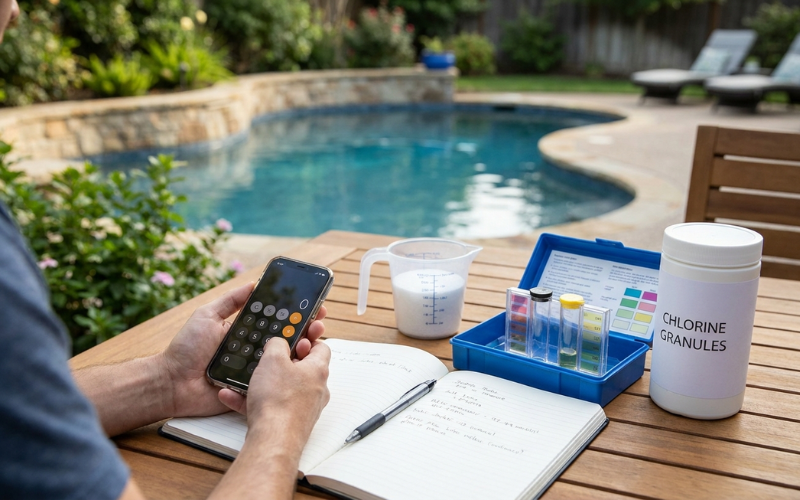
A safe calculation should always consider:
- the chlorine product type
- the product strength
- the pool volume
- the desired increase
Read the Product Label Carefully
The label usually gives important dosing guidance. That information should not be ignored. It helps translate the chlorine target into a practical amount of product.
Make Adjustments in Measured Steps
Even when the calculation looks clear, it is still smart to think in controlled steps.
Add With Intention, Not Emotion
Pool care becomes easier when owners stop reacting emotionally to every low reading. A low chlorine result does not mean panic. It means calculate, add the proper amount, circulate, and retest.
This keeps the process calm and repeatable.
Allow Time for Circulation
After chlorine is added, the pool needs time to circulate before the owner can judge the result properly. Testing too soon may give an incomplete picture. Let the water move and distribute the product before deciding whether the adjustment worked.
Do Not Confuse a Normal Adjustment With Shock Treatment
This is another common beginner mistake. Not every low chlorine reading means the pool needs full shock treatment.
A Routine Adjustment Is Often Enough
If the pool is generally clear and only slightly low on chlorine, a normal calculated adjustment may be the right response. Jumping straight to heavy treatment can create more disruption than needed.
Shock Is for Specific Conditions
Shock may be appropriate when the pool has experienced heavy use, contamination, storms, or a more serious water quality drop. But a safe chlorine adjustment should begin by asking what the actual condition of the pool is, not by assuming the strongest option is always best.
A Better Routine Removes Most of the Stress
The more consistently a pool is tested and corrected, the less dramatic chlorine adjustment feels.
Regular Testing Makes Smaller Corrections Possible
When owners test often enough, chlorine problems are usually caught early. That means the adjustments stay smaller and easier to calculate. Small corrections are less stressful than large recoveries.
Simple Habits Beat Emergency Reactions
A calm routine usually looks like this:
- test the pool
- note the current chlorine level
- identify the target level
- confirm the pool volume
- check the product strength
- add the measured amount
- circulate the water
- retest before adding more
This process is much more reliable than guessing and hoping for the best.
Final Thoughts
Pool owners can calculate a safe chlorine adjustment without guesswork when they stop treating chlorine like a random fix. The process becomes much easier once it is based on real inputs: current reading, target reading, pool volume, and product strength.
That is what turns chlorine adjustment into a controlled decision instead of a stressful guess. Test first. Measure the gap. Match the dose to the pool. Then let the water circulate and confirm the result.
For most pool owners, that shift in mindset makes the biggest difference. Safe chlorine adjustment is not about memorizing complicated chemistry. It is about using a simple, repeatable process that helps the pool stay cleaner, safer, and easier to manage over time.